
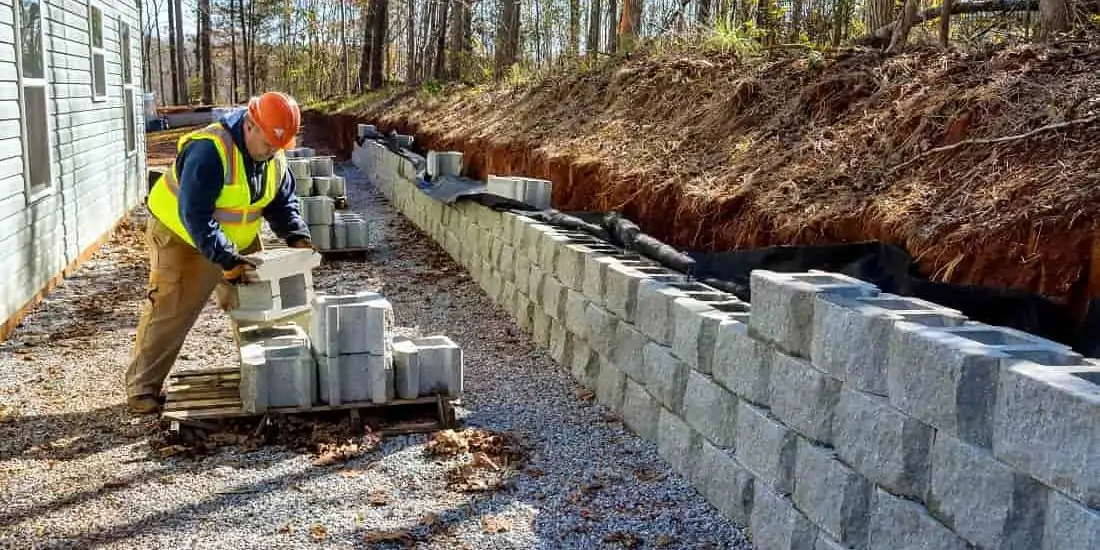
Retaining wall repairs focus on restoring a structure’s ability to resist the lateral pressure of soil and water while maintaining the landscape’s elevation. These walls are critical for preventing erosion and protecting nearby foundations, but they are under constant stress from hydrostatic pressure, water buildup behind the wall, and environmental cycles like freezing and thawing. When a wall begins to fail, it typically shows signs through horizontal cracking, bulging in the center, or leaning forward, all of which indicate that the pressure from the earth is winning against the wall’s structural design.
The primary cause of failure is almost always inadequate drainage. When water cannot escape from behind the wall, it saturates the soil, significantly increasing its weight and pressure. Standard repairs often start with improving the drainage system by clearing blocked weep holes or installing a new French drain, a perforated pipe surrounded by gravel, to redirect water away from the wall. For walls that are leaning but still structurally sound, professionals may use soil anchors or tiebacks, which involve drilling into the stable earth behind the wall and using steel rods to pull and secure the structure back into place.
For localized damage, such as a “blowout” in a specific section of a block wall, the repair process usually involves a “V-shaped” deconstruction. Contractors mark out the failed area, remove the capstones and blocks, and excavate the backfill. This allows them to address the root cause, such as tree roots or poor soil compaction, before rebuilding the section course by course with fresh, compacted gravel backfill and geofabric to prevent future soil migration. While minor surface cracks can be sealed with specialized masonry adhesives or fillers to prevent water from entering and freezing, these are considered maintenance rather than structural fixes.
Homeowners should be aware that retaining wall work is often highly regulated; in many regions, walls over three to four feet in height require a professional engineer’s design and a formal building permit. Neglecting early warning signs like small bulges can lead to a total collapse, which is significantly more expensive to fix and may even involve liability issues if the failure impacts neighboring properties. Regular annual inspections, especially after the winter thaw, are the best way to catch drainage issues early and avoid a full-scale rebuilding.