
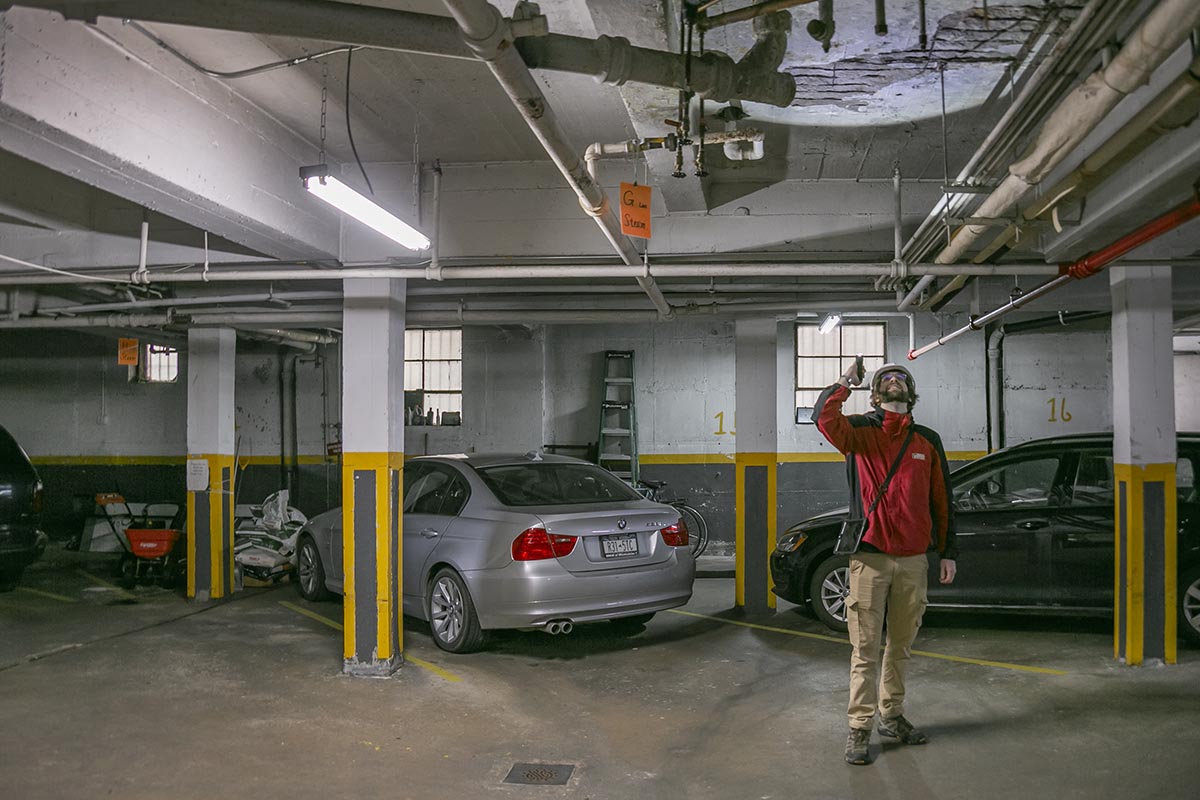
These are specialized engineering fields focused on structures that, unlike typical buildings, are constantly exposed to the elements, heavy moving loads, and corrosive chemicals. A parking structure is essentially an open-air bridge system that must withstand extreme thermal expansion, deicing salts, and the physical stress of thousands of vehicles. Because these facilities are often the first point of entry for visitors, their structural integrity and aesthetic condition are vital for both safety and property values.
Construction of a modern parking garage typically involves three primary structural systems: precast concrete, cast-in-place (poured-in-place) concrete, or steel framing. Precast concrete is highly popular for its speed, as components like “double-tee” slabs are manufactured off-site and assembled quickly. Cast-in-place construction, often using post-tensioned slabs, provides a more seamless, durable surface that is excellent for waterproofing but takes longer to build, which is typically 18 to 24 months. Design must also account for “openness” to meet building codes, which often eliminates the need for expensive mechanical ventilation and fire sprinkler systems required in enclosed garages.
Repair and Restoration are largely battles against “concrete cancer,” which is corrosion of internal steel reinforcement. When water and chloride ions from road salt penetrate the concrete, the steel rebar rusts and expands, causing the surrounding concrete to crack and flake off, a process known as spalling. Repairing this damage involves removing the compromised concrete, cleaning or replacing the rusted steel, and applying high-strength mortars. Advanced techniques like carbon fiber wrapping are also used to reinforce aging columns without the need for full replacement.
Proactive Maintenance is the most effective way to avoid the astronomical costs of structural failure. A critical component of this is the application of traffic-bearing membranes, liquid-applied coatings that seal the deck against moisture and chemicals. Regular upkeep also includes maintaining expansion joints, which allow the structure to move safely during temperature changes. In many jurisdictions, such as New York City, periodic professional inspections are now legally mandated to ensure that minor issues like hairline cracks or clogged drains do not escalate into catastrophic collapses.